
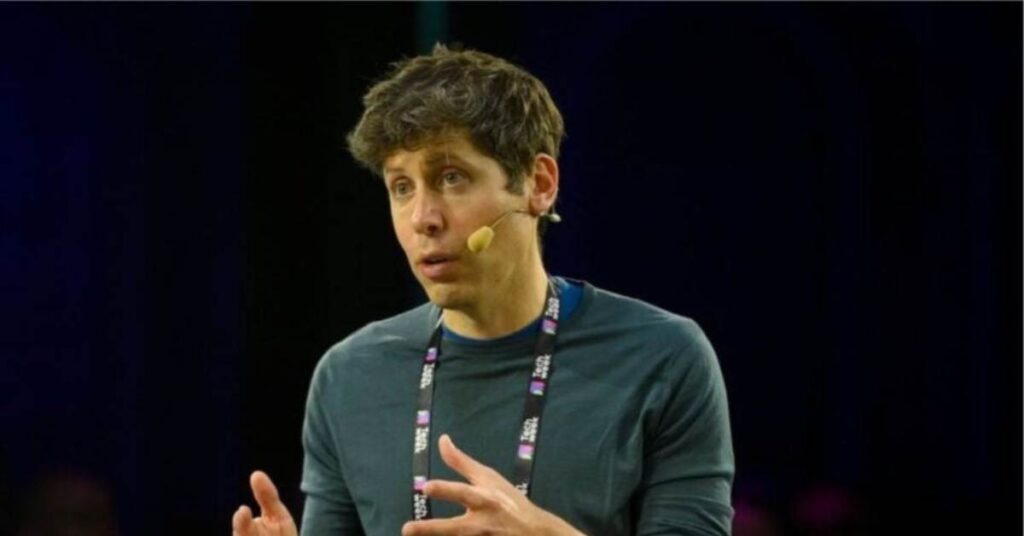
From the moment GPT-5, OpenAI’s new language model, was introduced, criticism quickly emerged. Many users described it as monotonous, not very intelligent, and ultimately inferior to its predecessor. In this context, Sam Altman, the CEO of the company, spoke words aimed at instilling calm: according to him, artificial intelligence is a bubble, and moreover, OpenAI is about to invest an amount equivalent to the GDP of France to develop its infrastructure.
According to The Verge, Altman made these statements during a dinner in San Francisco with journalists and other high-ranking OpenAI executives. There, he acknowledged that the software launch had presented shortcomings, but maintained that the future looks promising both for his company and for the industry as a whole.
The words of the CEO of OpenAI
“I think we had failures in the implementation,” he admitted. “On the other hand, the use of our API has doubled in two days and continues to rise.” We have run out of graphics processing units. ChatGPT has reached a new daily user record. Many users really like the change in models. We have understood what it means to improve a product for hundreds of millions of people in a single day.”
Altman also admitted that he agrees with those who believe that artificial intelligence represents a bubble similar to the early days of the internet. “Are we in a period where investors, in general, are showing excessive enthusiasm for AI?” In my perspective, it is,” he expressed.
A tech bubble or a bet on the future?
For some time now, experts and analysts have pointed out that the excitement around artificial intelligence could experience a sudden decline. Recent events, such as the loss in stock value of the startup Coreweave, which specializes in data center and AI infrastructure, have increased those uncertainties. For many, the sector resembles an abyss where companies invest considerable sums without a clear return in sight.
However, Altman emphasized: “When bubbles occur, intelligent people get overly excited about a basis of truth.” If we examine most bubbles throughout history, such as the technology one, there were authentic elements. The technology was significant. The internet was a groundbreaking event. People got carried away by the excitement.
Despite the objections, the CEO made his intentions clear: “You should anticipate that OpenAI will invest billions of dollars in the creation of data centers in the near future.”
The dilemma of the social value of AI
The extraordinary magnitude of the investment inevitably raises questions: does this considerable expenditure really justify itself? During the conversation, there seemed to be no concern regarding whether a cost-benefit analysis in social terms had been conducted.
The concerns are diverse and numerous. Is it reasonable to allocate billions of dollars for the development of chatbots that only have a limited percentage of success? Wouldn’t it be more beneficial to channel those funds toward eradicating poverty or improving education?.
Do chatbots represent a social necessity or are they simply an attractive whim? Does artificial intelligence provide more advantages than a conventional search engine? And even more, do the adverse effects, such as high energy consumption, the possible decrease in users’ cognitive abilities, or the increase in academic fraud, not outweigh the advantages provided?
It is possible that these concerns seem obvious, but it is not clear if anyone is addressing them seriously. Maybe at the next informal dinner with Altman, he will be encouraged to ask these questions. For the moment, Gizmodo has reported that it has directed its own concerns to OpenAI and will update its article if it receives a response.